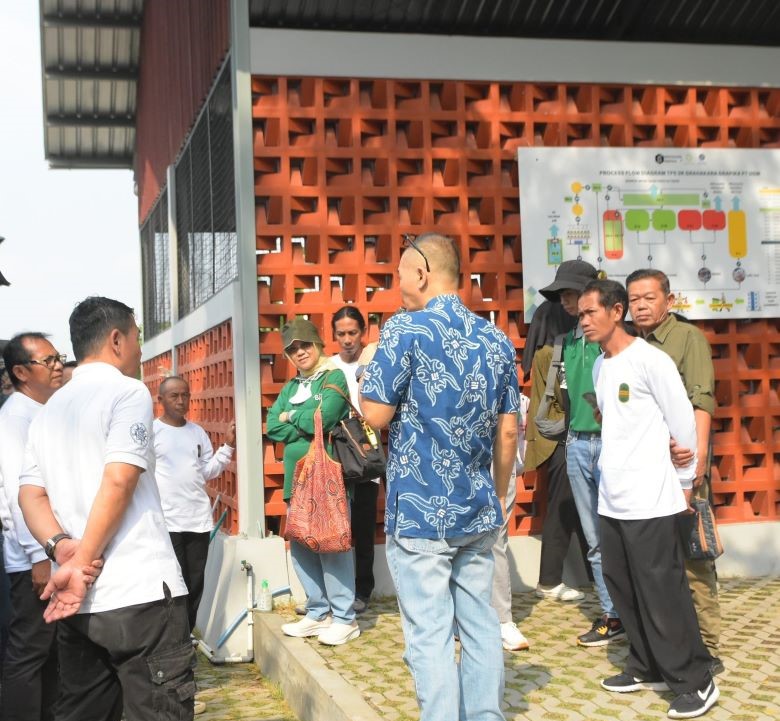
How Desa Sajen Built a Village Waste-Processing Facility — and Trained the People to Run It
A case study of the integrated waste-processing facility (RPST) in Desa Sajen, Mojokerto, East Java: CSR funding from PT SMI, operator training and a BUMDes business-planning workshop.
Waste is one of the most visible environmental problems in Indonesian villages. Without regular collection, household rubbish ends up burned, buried or dumped in rivers and fields. In Desa Sajen, a village in Mojokerto Regency, East Java, Yayasan Bestari Inovasi Indonesia worked with the community and a corporate partner to change that.
The challenge
Like many rural villages, Desa Sajen had no dedicated place to sort and process its waste. Organic and inorganic rubbish were mixed together, which made recycling almost impossible and left the community with few options other than open burning or dumping.
The solution: an integrated waste-processing facility
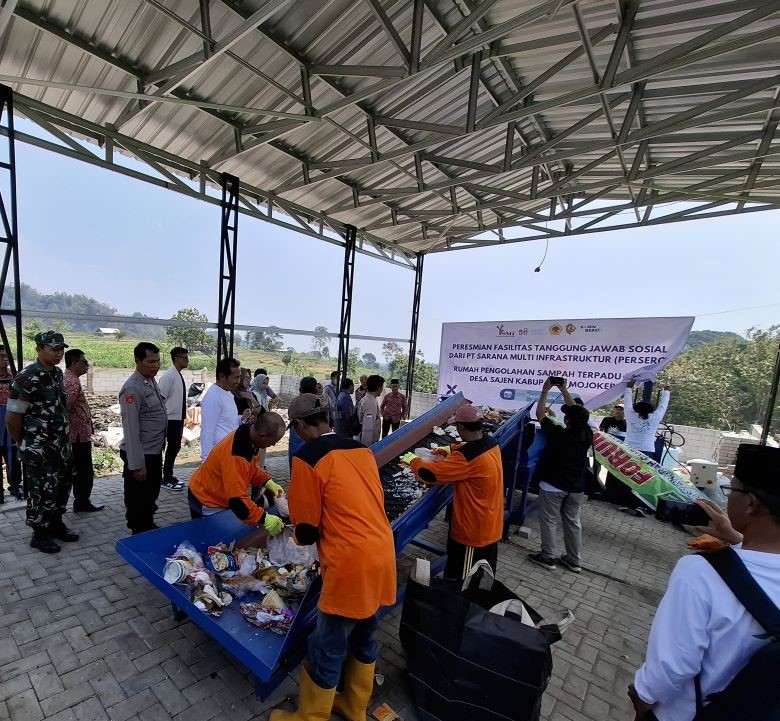
With corporate social responsibility (CSR) funding from PT Sarana Multi Infrastruktur (Persero), known as PT SMI, the village built an integrated waste-processing facility — a Rumah Pengolahan Sampah Terpadu (RPST). The covered facility includes sorting conveyors where incoming waste is separated so that recyclable materials can be recovered and organic waste can be processed instead of burned.
The facility was formally inaugurated with local government, community leaders and security officials in attendance — a sign of how much the project mattered to the whole village.
Why training mattered as much as the building
A facility is only as good as the people who run it. That is why the project included an operator training programme for the RPST, together with a business-planning workshop for the village-owned enterprise, BUMDes. The goal was simple: the village should be able to operate, maintain and eventually sustain the facility on its own.
- Operators learned how to sort waste safely and efficiently.
- The BUMDes team learned how to plan the facility as a long-term village business, not a one-off project.
- Community leaders gained a model they can explain to residents and other villages.
Lessons for other villages
The Desa Sajen experience shows that waste management works best when three things come together: proper infrastructure, trained local operators and a clear plan for who will run and pay for the service over time. Funding from a corporate partner can start the process, but education and local ownership keep it going.
Learn more
Yayasan Bestari Inovasi Indonesia continues to work with Desa Sajen, including on sustainable water management. If your company or village would like to explore a similar programme, contact our team to book an online meeting.